

Protein is essential for building and maintaining muscle, supporting recovery after exercise, and helping adults stay strong as they age. Although animal foods are well-known sources of protein, affordable plant-based foods such as lentils, chickpeas, kidney beans, soybeans, and peanuts can also contribute significantly to daily protein needs.
Research into nutrition and healthy ageing increasingly emphasizes the combination of adequate protein intake, regular strength-building exercise, and a balanced diet. For people who prefer vegetarian foods, the practical question is not simply which food contains the most protein, but which sources provide enough protein, essential amino acids, and other nutrients at a reasonable cost.
This article compares common protein sources, explains how they support muscle maintenance, and explores practical ways to include them in an affordable Indian diet.
1. Why Protein Matters for Muscle Health
Muscles are constantly undergoing a process of breakdown and repair. The body uses amino acids—the building blocks of protein—to repair muscle tissue and support the formation of new muscle proteins.
When adults consume protein, digestion breaks it down into amino acids that the body can use for these functions. Resistance exercise, such as squats, push-ups, weight training, or exercises using resistance bands, stimulates muscle protein synthesis. Consuming enough protein helps support this response.
Protein is especially important during healthy ageing. As people grow older, they may gradually lose muscle mass and strength, a process associated with sarcopenia. This can affect mobility, balance, independence, and the ability to perform everyday activities.
However, protein alone cannot prevent all age-related muscle loss. Physical activity, sufficient energy intake, sleep, overall diet quality, and management of health conditions also matter.
2. Plant Protein vs. Animal Protein
Plant and animal foods can both supply the amino acids needed to maintain muscle. Their nutritional differences depend on the specific food, portion size, processing method, and overall diet.
Animal proteins such as dairy, eggs, fish, and meat often contain all nine essential amino acids in proportions that are readily usable by the body. Plant foods vary more in their amino acid profiles, and some have lower digestibility because of their natural fibre and other compounds.
Nevertheless, soy foods are particularly useful plant protein sources because they provide all nine essential amino acids. Lentils, beans, grains, nuts, and seeds can also contribute to a balanced amino acid intake when eaten as part of a varied diet.
The key point: A vegetarian diet can support muscle maintenance when it provides sufficient total protein, energy, and essential nutrients.
3. Comparing Affordable Protein Sources
The best protein source depends on its protein content, cost, availability, digestibility, and the other nutrients it provides. The following values are approximate and can vary by variety, brand, preparation, and water content.

1. Lentils and dal
Masoor dal, moong dal, toor dal
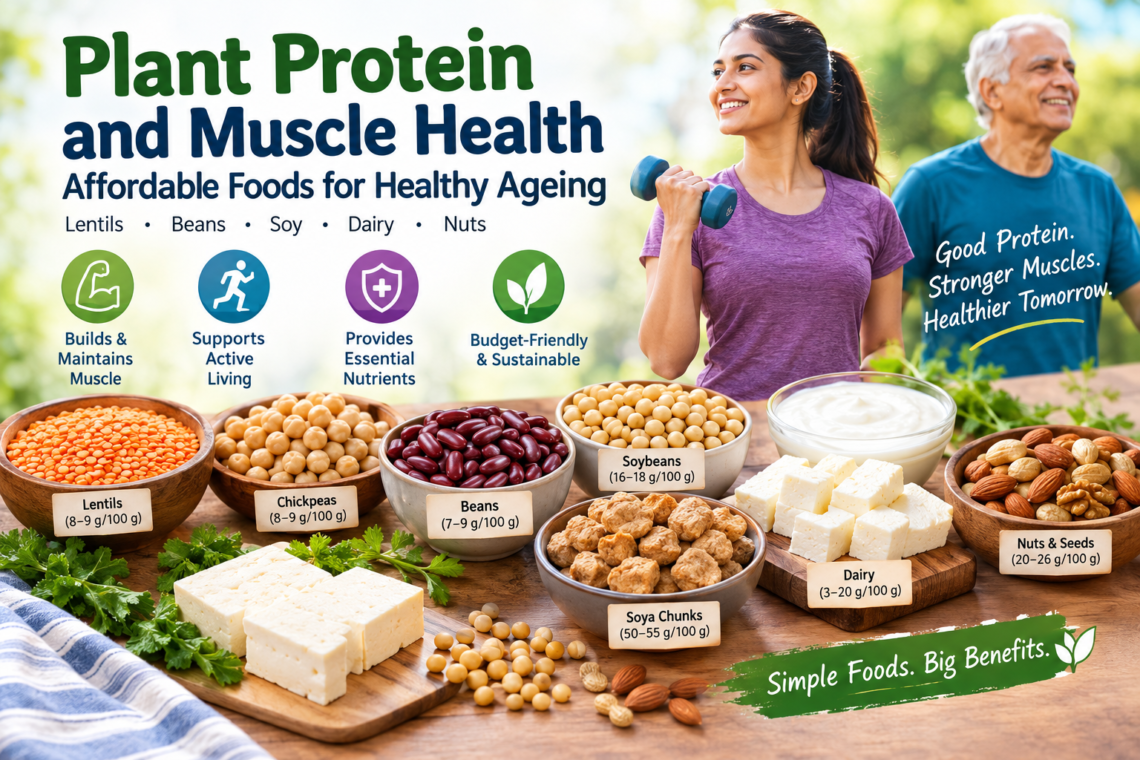
Cooked lentils provide approximately 8–9 g of protein per 100 g. They are affordable sources of protein, fibre, folate, iron, and other minerals. Dal with rice or roti makes a practical everyday meal.
Best for: Affordable daily protein, digestive health, and overall diet quality.

2. Beans and chickpeas
Rajma, kala chana, kabuli chana, lobia
Cooked beans generally supply around 7–9 g of protein per 100 g. They also provide fibre, complex carbohydrates, and minerals. Their combination of protein and fibre can help meals feel satisfying.
Best for: Low-cost meals that combine protein, energy, and fibre.

3. Soybeans and soya chunks
Soybeans, tofu, soya chunks
Cooked soybeans contain approximately 16–18 g of protein per 100 g, while dry soya chunks often contain about 50–55 g per 100 g before soaking and cooking. Soy provides all nine essential amino acids.
Best for: Getting substantial protein from a vegetarian diet, especially when food budgets are limited.

4. Dairy foods
Milk, plain curd, yogurt, paneer
Milk provides about 3–3.5 g of protein per 100 ml, and plain curd commonly provides around 3–4 g per 100 g. Paneer is more concentrated, often supplying approximately 15–20 g per 100 g.
Best for: Protein, calcium, and convenient meals for lacto-vegetarians.

5. Nuts and seeds
Peanuts, almonds, sesame, pumpkin seeds
Peanuts provide approximately 25–26 g of protein per 100 g, while almonds provide around 20–21 g. However, nuts are energy-dense, and normal snack portions provide less protein than the figures per 100 g might suggest.
Best for: Adding protein, unsaturated fats, and minerals to snacks and meals.
4. Which Protein Source Is Best for Muscle Maintenance?
There is no single food that is best for everyone. However, the evidence supports a few useful comparisons.
| Food source | Approx. protein | Main advantage |
|---|---|---|
| Cooked lentils | 8–9 g/100 g | Affordable and fibre-rich |
| Cooked chickpeas | 8–9 g/100 g | Protein and complex carbohydrates |
| Cooked soybeans | 16–18 g/100 g | Complete essential amino acid profile |
| Dry soya chunks | 50–55 g/100 g dry | Concentrated, budget-friendly protein |
| Milk | 3–3.5 g/100 ml | Protein and calcium |
| Plain curd | 3–4 g/100 g | Convenient protein-containing food |
| Paneer | 15–20 g/100 g | Concentrated protein and calcium |
| Peanuts | 25–26 g/100 g | Protein and unsaturated fats |
These are typical estimates, not laboratory measurements of every product. Dry weights must not be compared directly with cooked weights without accounting for water absorption.
For people who want to maintain muscle on a limited budget, soya chunks, dal, beans, and peanuts are useful choices. Dairy can complement these foods when it fits the person’s diet and budget.
What does recent research say?
A 2025 systematic review and meta-analysis examined 43 randomized controlled trials comparing plant and animal protein for muscle health. Its pooled analysis found a small advantage for animal protein in muscle mass overall, but it did not find significant differences in muscle strength or physical performance. Importantly, the analysis found no significant difference between soy and milk protein for muscle mass. The evidence for older adults remains limited, so these findings should not be interpreted as proof that all plant proteins perform identically.
The practical lesson is that protein source matters, but the overall diet, amount consumed, and exercise routine matter too. Soy is a particularly promising option for people who want to meet their protein needs without relying on meat or expensive supplements.
5. How Much Protein Do Adults Need?
Protein requirements vary with body weight, age, activity level, health status, and personal goals.
For generally healthy adults, the commonly used recommended dietary allowance is approximately 0.8 g of protein per kilogram of body weight per day. This is a baseline for most healthy adults, not necessarily an optimal target for every older adult or someone undertaking regular strength training.
For example:
| Body weight | Baseline at 0.8 g/kg/day |
|---|---|
| 50 kg | 40 g/day |
| 60 kg | 48 g/day |
| 70 kg | 56 g/day |
| 80 kg | 64 g/day |
Some older adults and people who exercise regularly may benefit from higher protein intakes, depending on their circumstances. There is no universal higher target that fits everyone, particularly people with kidney disease or other conditions requiring dietary adjustments.
Should protein be spread throughout the day?
Rather than consuming nearly all daily protein at dinner, it can be practical to include a protein source at breakfast, lunch, and dinner, with a protein-rich snack if needed.
For example, an Indian vegetarian day could include moong dal chilla at breakfast, rajma with rice at lunch, roasted chana as a snack, and soya curry with roti at dinner. This approach makes protein intake easier to manage without requiring expensive powders.
6. Why Strength Training Matters as Much as Protein
Eating protein supplies the building blocks for muscle, but muscles also need a reason to adapt and become stronger.
Resistance exercise stimulates muscle protein synthesis and helps preserve strength and physical function. Activities can include bodyweight squats, wall push-ups, resistance-band exercises, or lifting weights appropriate to a person’s abilities.
For healthy adults, a useful starting routine is to perform strength-building exercises on two or more days per week, with gradual progression and adequate recovery. Older adults may also benefit from balance and functional exercises to support mobility and reduce fall risk.
Protein-rich meals after exercise can help meet daily needs, but there is no need to depend on a special supplement or a narrow post-workout window if total dietary intake is adequate.
7. An Affordable Indian Vegetarian Meal Plan for Muscle Health

Here is an example of how common foods can fit into a balanced day. Portions should be adjusted according to appetite, body size, activity, and nutritional needs.
| Meal | Affordable food options |
|---|---|
| Breakfast | Moong dal chilla with curd, or besan chilla |
| Mid-morning | Roasted chana or a small handful of peanuts |
| Lunch | Dal, rice or roti, seasonal vegetables |
| Evening snack | Milk, curd, or roasted chana |
| Dinner | Soya chunk curry, roti, and vegetables |
| Alternative meals | Rajma, kala chana, lobia, tofu, or paneer |
The total protein will depend on portion sizes and the particular foods chosen. For example, a small bowl of dal provides less protein than a large serving of cooked soybeans. Tracking actual portions for a few days can help identify whether a diet meets an individual’s needs.
8. Common Mistakes to Avoid
One mistake is assuming that a vegetarian diet automatically contains enough protein. A diet based mainly on rice, potatoes, tea, and small amounts of dal may not provide adequate protein or total energy, particularly for an active adult.
Another mistake is relying on nuts alone. Nuts are nutritious, but they are calorie-dense, so using dal, beans, soy, and dairy as major protein sources may be more practical for many budgets.
It is also unnecessary to combine specific plant proteins in every single meal. Eating a varied diet across the day, with legumes, grains, soy, nuts, seeds, and dairy if consumed, can help provide essential amino acids.
Finally, avoid assuming that more protein always means more muscle. Without appropriate exercise, sufficient energy, and recovery, simply increasing protein intake may not produce the desired improvement in strength.
People with chronic kidney disease or other conditions affecting protein requirements should seek individualized medical or dietetic advice before substantially increasing their intake.
9. Research Gaps and Future Directions
Although research on plant protein is expanding, important questions remain. Many clinical trials study isolated protein powders rather than ordinary foods such as dal, rajma, soybeans, or mixed Indian vegetarian meals. Results from supplements therefore cannot always be applied directly to everyday diets.
Future research should compare affordable whole-food diets over longer periods and measure not only muscle mass but also grip strength, walking ability, falls, independence, and quality of life in older adults.
Researchers also need to investigate how age, physical activity, total calorie intake, food processing, and differences in protein digestibility affect outcomes. Such evidence could help develop more practical nutrition recommendations for populations where vegetarian diets are common and food affordability is important.
Conclusion
Plant protein can play an important role in muscle maintenance and healthy ageing. Lentils and beans provide affordable protein alongside fibre and essential nutrients, soy offers a particularly useful amino acid profile, dairy provides protein and calcium, and peanuts and seeds add protein and healthy fats.
The strongest practical strategy is to combine a varied, protein-adequate diet with regular strength training and sufficient overall nutrition. For budget-conscious vegetarian adults, dal, chickpeas, rajma, soya chunks, curd, and peanuts can form the foundation of a realistic approach to maintaining muscle and supporting healthy ageing.
The science is encouraging, particularly for soy protein, but more long-term research on whole-food plant-based diets is needed. A sustainable diet built around familiar, affordable foods is often more useful than relying on expensive supplements.
Research references
1. Reid-McCann, R. J., et al. (2025). Effect of Plant Versus Animal Protein on Muscle Mass, Strength, Physical Performance, and Sarcopenia: A Systematic Review and Meta-analysis of Randomized Controlled Trials. Nutrition Reviews. Read the study.
2. Williams, C., et al. (2023). Effects of Plant-Based Protein Interventions, with and without an Exercise Component, on Body Composition, Strength and Physical Function in Older Adults. Nutrients. Read the study.
3. The effect of dose, frequency, and timing of protein supplementation on muscle mass in older adults: A systematic review and meta-analysis. Ageing Research Reviews (2024). Read the research summary.